
A rubric for problem solving? Uh, yes please!
Grading word problems in K–2 can sometimes feel like decoding a secret message. Some students show exactly what they’re thinking, while others… not so much. You want to know who truly understands the problem, who is using a strategy that works, and who can connect their thinking to a number sentence, but keeping all that straight for every student? Exhausting.
That’s why I started using a simple rubric for problem solving called U.S.P. It stands for Understanding, Strategy, and Precision, and it has completely changed how I grade word problems in my first grade classroom.

What a Rubric for Problem Solving Can Do for You
A few years ago, I started using a rubric with the acronym U.S.E. for my addition and subtraction word problems, and it has completely changed the game. Here’s the secret: it breaks down student work into Understanding, Strategy, and Equation/Explanation. With this framework, I can quickly see students’:
- Understanding: Can the student identify what the problem is asking?
- Strategy: Did they choose a method that makes sense and actually solves the problem?
- Precision: Can they explain their thinking and connect it to a number sentence?
This framework makes grading so much faster. Instead of puzzling over whether a student “got it,” I can quickly see strengths and areas for growth. It also makes feedback meaningful because students can clearly see what they did well and where to focus next.

Using a Rubric with Addition and Subtraction Word Problems
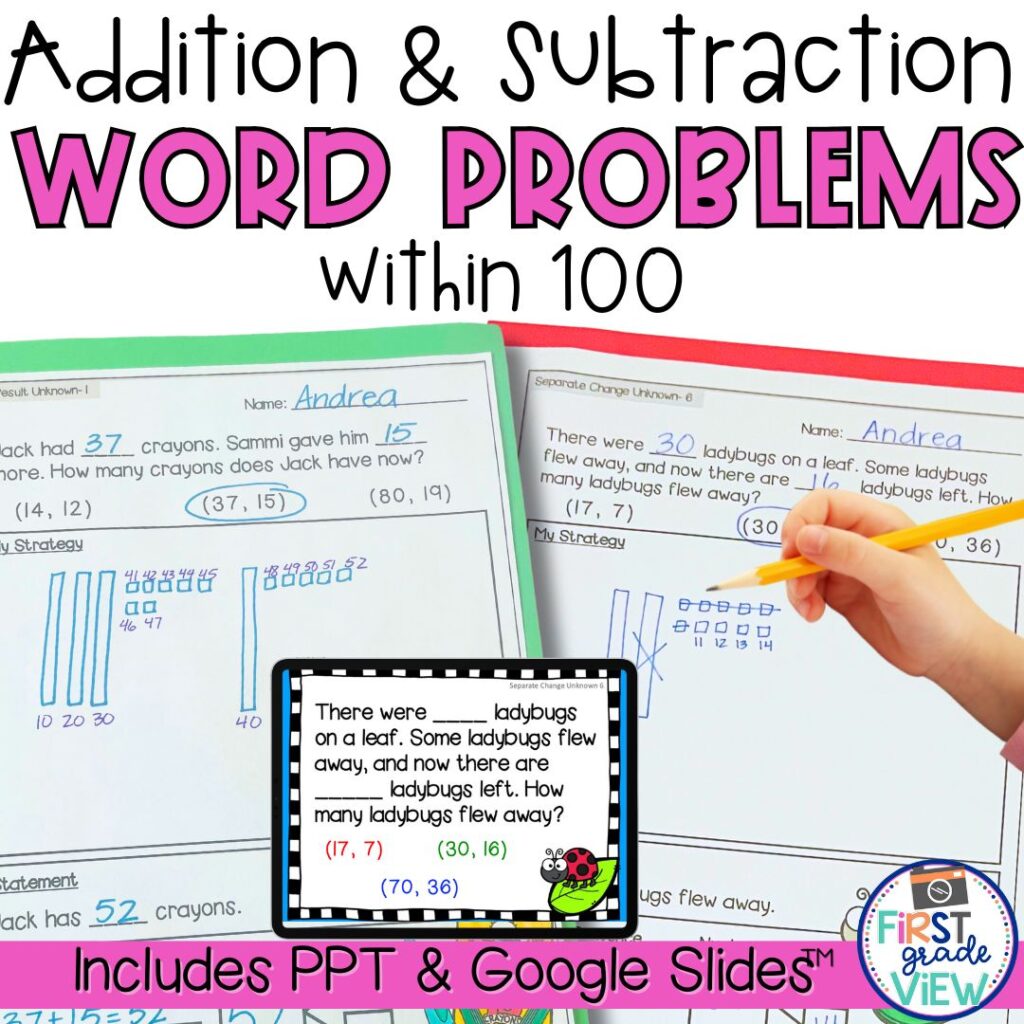
If you’re thinking, I wish I had a ready-to-go system, I’ve got you covered. My CGI Addition & Subtraction Word Problems Bundle includes this rubric for problem solving in three teacher-friendly formats. The bundle also has a variety of engaging problems that help students build conceptual understanding while giving you an easy way to grade consistently. If grading word problems has ever felt overwhelming, this bundle is your new best friend. U.S.P. helps you take the guesswork out of assessment while keeping students engaged and accountable for their thinking.

Using a rubric for problem solving not only saves time—it also helps students see what “good math thinking” looks like. With a clear system like U.S.P., grading word problems becomes straightforward, and students gain confidence in their problem-solving skills.
You May Also Like:
Differentiating Word Problems: Meeting the Unique Needs of Your First Grade Students
10 Simple Techniques to Make Engaging Word Problems for First Graders
Types of Story Problems in Math: How to Spot the Tricky Ones


