
Numberless word problems are a must-try strategy that help students actually understand what math problems are asking.
They spot the numbers, ignore the story, and start calculating—without really thinking about what the problem is actually asking. Ugh, it’s frustrating, right?
If you’ve ever thought, “They’re just guessing!” or “They don’t even know what the problem is about!”—you are not alone. And no, you’re not doing anything wrong. Word problems are tricky for a lot of students because they’re juggling two big skills: reading comprehension and math understanding. That’s where numberless word problems come in.
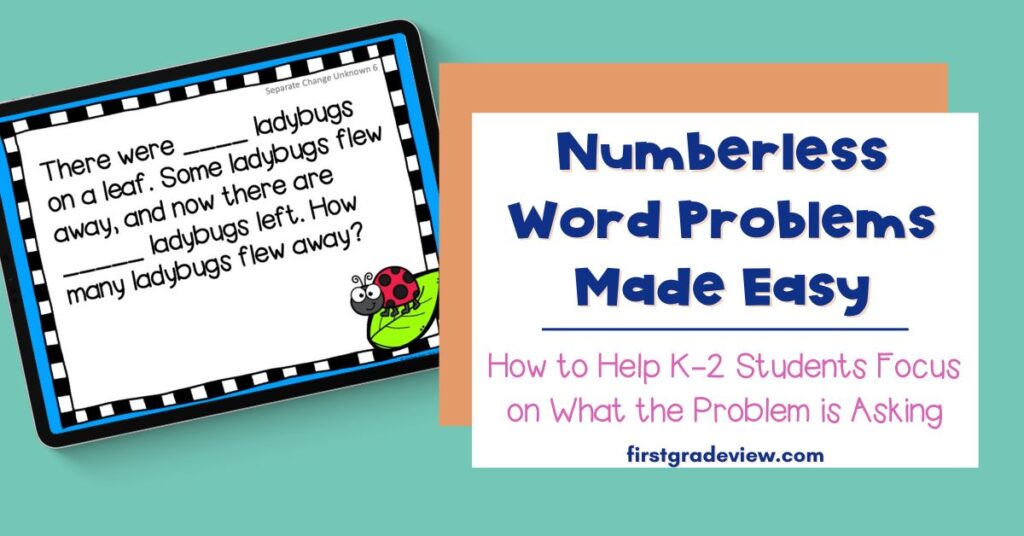
Yep, numberless. As in: no numbers at all (at first!). But don’t roll your eyes—this isn’t just some trendy trick. It’s a seriously powerful strategy that slows students down, helps them make sense of what’s going on, and builds true math comprehension. If you’re teaching word problems and looking for a way to help students actually understand the math, this is a must-try.
Let’s break it down.
What Are Numberless Word Problems?
Think of numberless word problems as a way to take the pressure off the numbers and shift your students’ focus to what’s actually happening in the story. Instead of jumping straight into solving, students first listen to or read a word problem—with no numbers in sight.
Yep—no quantities, no totals, just the story.
This helps them slow down and think:
- What is this story about?
- What is the problem asking me to find?
- What might be happening here—adding something, taking something away, putting parts together?
Once students understand the context, then you reveal the numbers. Now they’re not just plugging things in—they’re solving with understanding. (And you get to breathe a little easier.)

Why Use Numberless Word Problems in First Grade?

We both know our first graders are still growing as readers. Combine tricky math with tricky reading, and word problems can feel like a total brain overload.
By removing the numbers at first, numberless word problems give students space to focus on math comprehension strategies like:
- Visualizing what’s happening
- Identifying the action in the story (is something being added or taken away?)
- Thinking about what kind of answer makes sense
And bonus: they’re also getting meaningful math fact practice—but with a purpose. Instead of guessing or number-grabbing, they’re actually connecting their math facts to real-life situations. That builds confidence and number sense. (Win-win!)
How to Use Numberless Word Problems in the Classroom
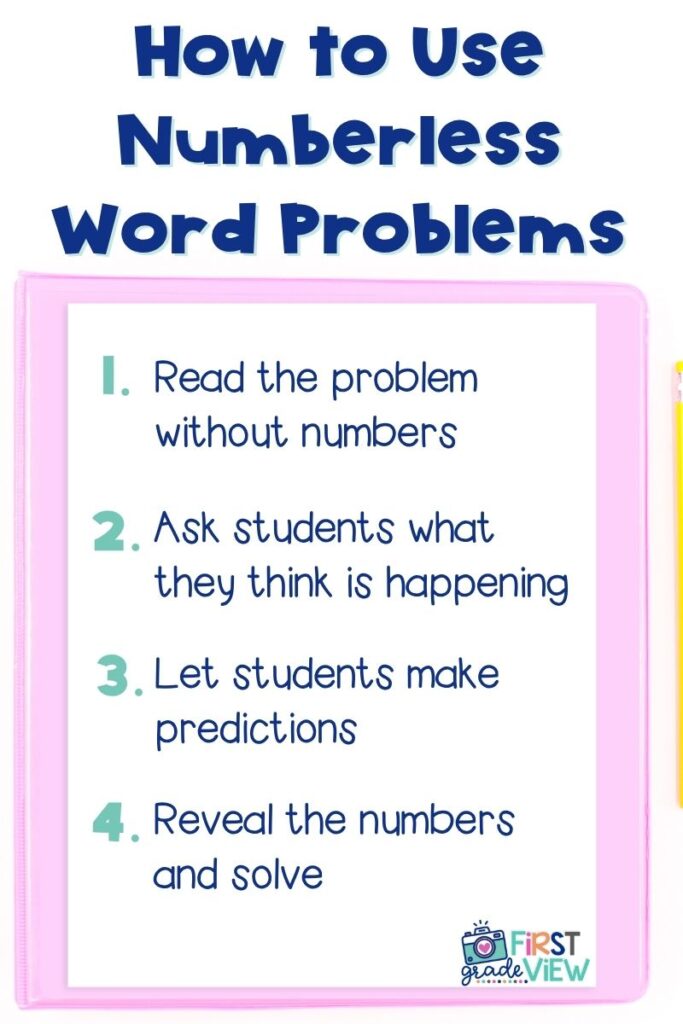
You can use numberless word problems during your math block as a warm-up, small group lesson, or quick whole-group discussion. Here’s how a simple lesson might go:
- Read the problem without numbers
Example: “There were ___ books on the table. Some more were added. Now there are ___ books on the table.” - Ask students what they think is happening
👉 What’s the action in the story?
👉 What are we trying to figure out? - Let students make predictions
Ask them, “What kind of question might be asked?” or “What do you think this problem will be about?” - Reveal the numbers and solve
Now that they understand the problem, they can decide on a strategy and solve with confidence.
Make It Visual (And Keep It Simple)
Visual supports can take this to the next level—think numberless problem cards, ten frames, number bonds. I love grabbing problems straight from my Addition and Subtraction Word Problem Bundle and just hiding the numbers during round one.
It’s an easy way to turn what you already have into a numberless word problem without reinventing the wheel (because who has time for that?).
Once students get the hang of it, you’ll be amazed at how much better they understand the structure of word problems—especially those sneaky “change unknown” or “compare” types.
Real Talk: This Doesn’t Take a Ton of Prep
I know what you’re thinking:
“This sounds great, but I don’t have time to write numberless word problems every day.”
Good news—you don’t have to.
My Addition and Subtraction Word Problem Bundle works perfectly for this. Just hide the numbers or reveal the story part first during your mini lesson, and boom—you’re building comprehension, number sense, and math confidence without adding a ton to your prep list.

Final Thoughts on Numberless Word Problems
If your students are rushing through word problems, guessing at answers, or just plugging in numbers without understanding, try backing up and going numberless. Seriously. It’s one of those tiny shifts that brings big results.
By focusing on the story first, your students become stronger problem solvers—and more confident mathematicians.
Ready to give it a try?
Grab my Addition and Subtraction Word Problem Bundle and start creating your own numberless problems with zero extra prep. It’s an easy way to jump in, and you’ll love the difference it makes.

You May Also Like:
Behind the Scenes of a Great First Grade Math Block
Why You Should Be Teaching the 8 Mathematical Practices in the First Week of School
Leveling Up Your Graphing Activities for First Grade


