
You may be wondering how to declutter classroom paper piles. You know that random pile of “maybe I’ll use it” papers? The one that silently judges you from the corner of your desk? It’s time to deal with it—and I promise, no guilt involved.
Whether it’s leftover copies, student work, or that mystery stack of worksheets you never got to, here’s how to declutter classroom paper piles at the end of the school year before you pack up your classroom.
How to Declutter Classroom Paper Piles at the End of the School Year
How to Declutter Classroom Paper Piles Step 1: Sort It Out—The Three Pile System
When in doubt, sort it out.
The end-of-the-year paper chaos is real, but starting with a simple system makes it way less overwhelming. I always begin with three easy piles:
👉 Reuse
👉 Recycle
👉 Reference
As you tackle your stacks (or overflowing bins—we’ve all been there), hold each paper and ask yourself:
- Will I actually use this again? If yes, it goes in Reuse. Think copies you didn’t get to, anchor charts you laminated, or graphic organizers you love using year after year.
- Is this outdated, unnecessary, or a duplicate? Be ruthless here! If it’s a random extra worksheet or something you haven’t touched all year… Recycle it. Clear space, clear mind.
- Do I want to keep this as a sample or resource? These are the gems—student work examples, writing samples, or helpful teaching guides. Stick those in Reference. Bonus tip: snap a quick pic of any bulky items and store them digitally instead!
Getting through this step feels SO good. Once you’ve sorted everything into these categories, you’re already halfway to a clutter-free classroom.

Step 2: Keep Standout Student Samples
You know those shining moments of brilliance in student work? Save a few!
Don’t let them get lost in the paper pile abyss. Save a few standout samples to use as mentor texts or modeling pieces for next year.
You can either:
✔️ Keep the originals (just slap a sticky note with the student’s name + year)
✔️ Make a clean copy if you want to protect the original or anonymize it
Pro tip: File each piece with the unit it belongs to—for example, tuck that awesome narrative writing sample right into your narrative writing folder. Got a great math explanation? Slide it into your problem-solving or place value unit binder.
This way, when you’re planning next year and need an anchor example to show your students what “good” looks like, you’ve got it ready to go—no digging, no scrambling. Your future self will thank you!

How to Declutter Classroom Paper Piles Step 3: Toss the Guilt with Unfinished Worksheets
Didn’t get to that one worksheet (or ten)? It’s okay. Deep breath—this happens every. single. year.
First, be honest with yourself:
Is this something you’ll realistically use next year? If not, go ahead and toss it in the recycle pile. Permission granted. Guilt-free.
But—if you do think it’s still useful, here’s a smart move: turn it into an optional summer packet. Just pull together a few pages that review key skills and pop them into a folder or stapled packet. You’re not creating something new—you’re simply repurposing materials you already prepped.
- It keeps learning fresh over the summer
- It’s zero extra work on your part
- Families will love having something academic to keep little minds busy
This gives students a way to refresh what they’ve learned without creating extra work for you. Low effort for you, high impact for your students. Win-win.
Step 4: Save One Copy of the Good Stuff
For activities or printables you know you’ll use again, save one clean master copy.
Here’s my go-to system:
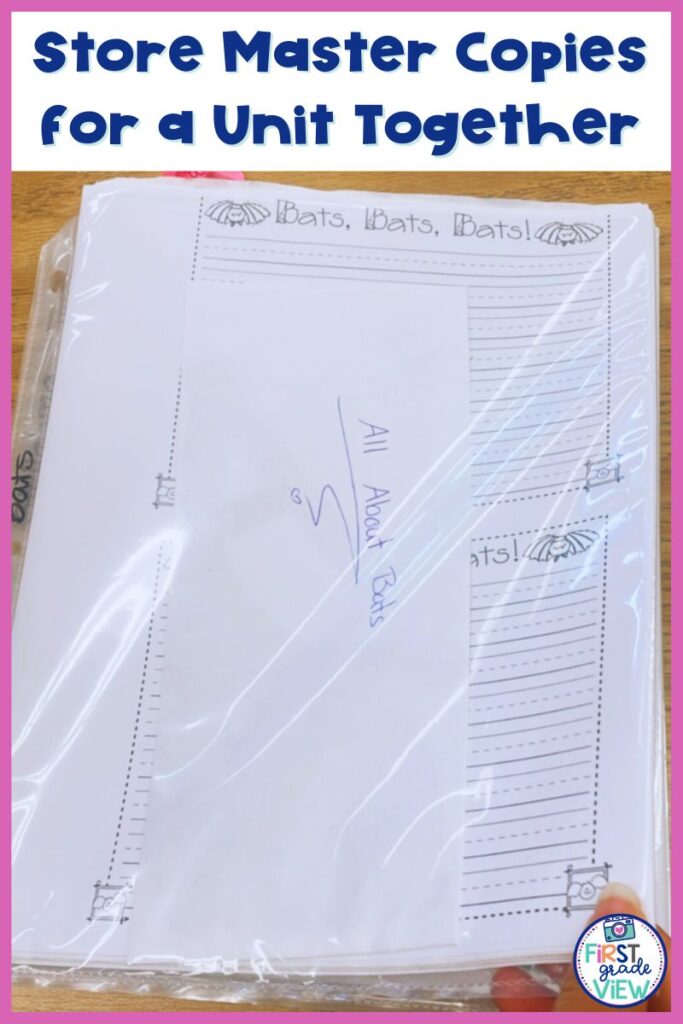
I place each master copy in a page protector and store it either in a file cabinet or a binder. If it’s part of a larger unit (like when I teach about bats), I staple the page protectors together so the whole unit stays grouped. This makes it super easy to grab exactly what I need when it’s time to make copies next year. You will also be so thankful come August that you didn’t just stash all your master copies into the closet.
How to Declutter Classroom Paper Piles at the End of the School Year Wrap Up
Decluttering paper piles at the end of the school year can feel overwhelming—but with a quick system, they don’t have to. Before you pack up your classroom, take a little time to sort, save, and recycle with intention. Your organized future teacher self will be doing a happy dance come fall!
Tackling your paper piles this week? Snap a before-and-after pic and tag me on Instagram @firstgradeview! I’ll be cheering you on!
You May Also Like:
Packing Up Your Classroom: 3 Easy Hacks to Make Next Year Easier
Exciting End of the Year Awards to Wrap Up the School Year
5 Unforgettable End-of-the-Year Activities for Your Classroom


